




1ZZ-FE 1.8L Engine – Specifications, Applications, and FAQs
The Toyota 1ZZ-FE engine is one of the most recognized and widely used engines from Toyota’s ZZ family. Produced between 1998 and 2008, this 1.8-liter inline-four engine was designed to provide a balance between reliability, performance, and fuel efficiency, making it a popular choice in compact cars, sedans, and even some crossovers.
Known for its lightweight aluminum design, fuel economy, and versatility, the 1ZZ-FE has powered millions of Toyota and General Motors vehicles globally.
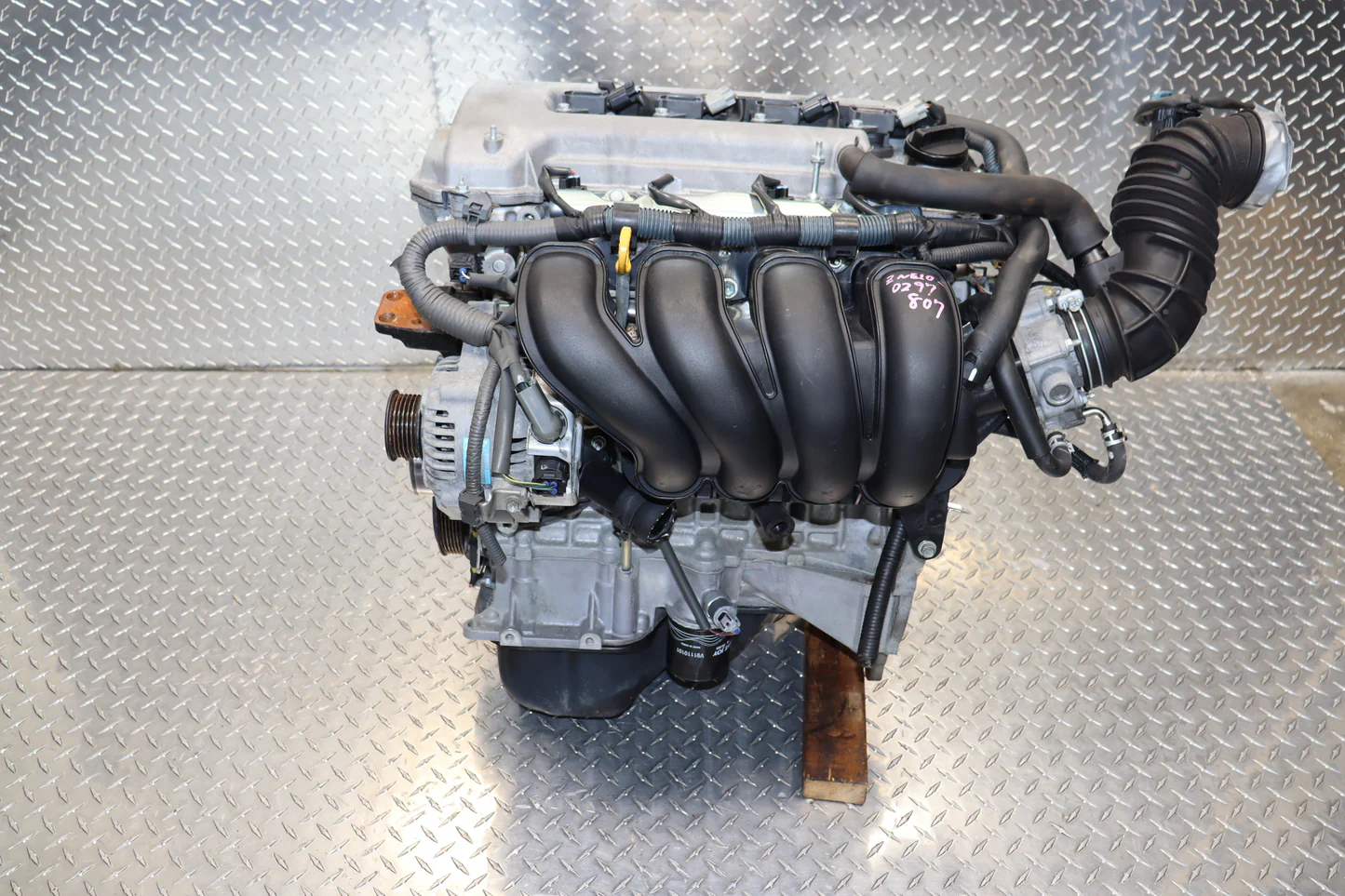
1ZZ-FE 1.8L Engine
🔧 Key Specifications of the 1ZZ-FE 1.8L Engine
| Specification | Details |
|---|---|
| Engine Code | 1ZZ-FE |
| Production Years | 1998 – 2008 |
| Engine Family | Toyota ZZ series |
| Configuration | Inline-4, DOHC, 16 valves |
| Displacement | 1.8L (1794 cc) |
| Bore x Stroke | 79 mm × 91.5 mm |
| Compression Ratio | 10.0:1 (varies slightly by model/year) |
| Block Material | Aluminum with cast iron cylinder liners |
| Head Material | Aluminum |
| Fuel System | Sequential Multi-Port Fuel Injection (MPFI) |
| Valve System | DOHC with VVT-i (Variable Valve Timing with intelligence) |
| Max Power Output | 120–140 hp (89–104 kW) at 6,000 rpm |
| Max Torque | 125–130 lb-ft (169–175 Nm) at 4,200 rpm |
| Redline | ~6,400–6,800 rpm |
| Timing Mechanism | Timing chain (not belt) |
| Fuel Type | Unleaded Gasoline |
| Oil Capacity | 3.7–4.0 liters (with filter) |
| Average Fuel Economy | 25–32 mpg (varies by vehicle application) |
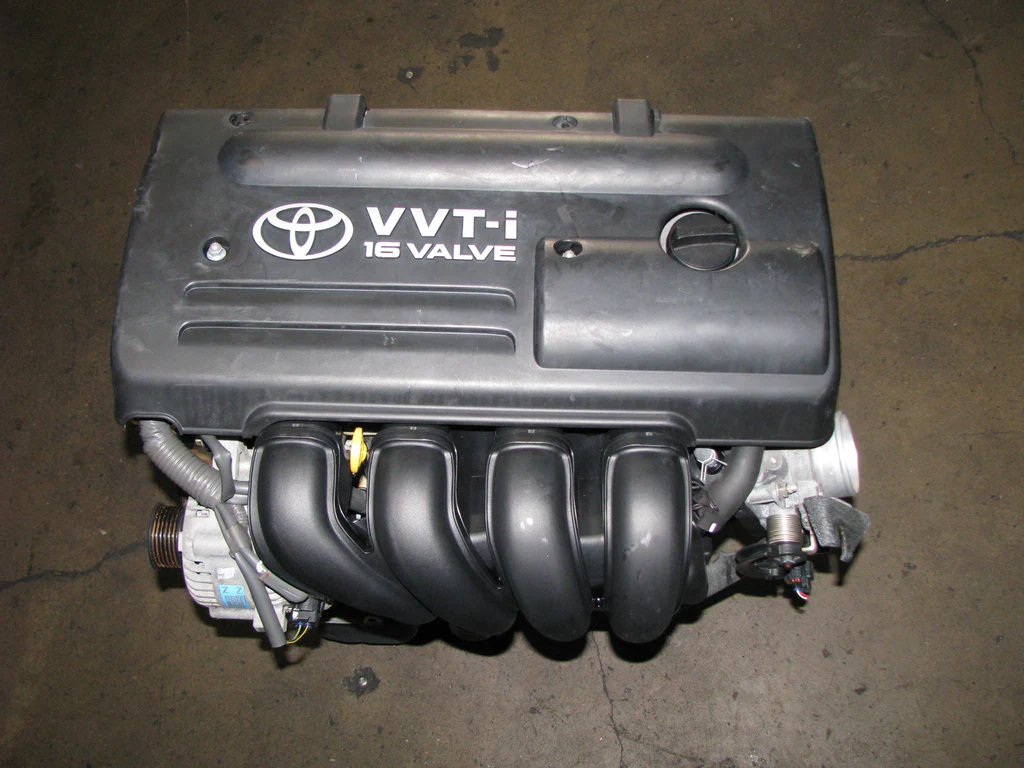
1ZZ-FE 1.8L Engine
🚗 Vehicle Applications of the 1ZZ-FE
The 1ZZ-FE 1.8L engine was installed in many Toyota vehicles, as well as some GM models under joint ventures.
Toyota Models
-
Toyota Corolla (E110, E120, E130) – 1998 to 2008
-
Toyota Celica (T230) – 1999 to 2005
-
Toyota MR2 Spyder / MR-S – 1999 to 2007
-
Toyota Avensis – 2000 to 2009
-
Toyota Allion & Premio – Early 2000s models
-
Toyota Caldina – Select versions
-
Toyota Wish – Compact MPV in Asia
-
Toyota Voltz – Japanese domestic model (based on Pontiac Vibe)
-
Toyota RAV4 (XA20) – 2000 to 2005
General Motors / Pontiac Models
-
Chevrolet Prizm (1999–2002, joint Toyota-GM venture)
-
Pontiac Vibe (2002–2008, twin to Toyota Matrix)
Other Applications
-
Some Asian and European-market Toyota minivans and sedans used the 1ZZ-FE.
✅ Advantages of the 1ZZ-FE Engine
-
Fuel Efficiency: Balanced power and economy, suitable for daily driving.
-
Reliability: Proven durability when maintained properly.
-
Lightweight: Aluminum block reduces vehicle weight and increases efficiency.
-
Timing Chain: Eliminates the need for timing belt replacement.
-
Global Availability: Widely produced and easy to source parts.
⚠️ Common Issues with the 1ZZ-FE
-
Oil Consumption (Pre-2003 models):
Early versions suffered from oil consumption due to piston ring design, improved after 2003. -
Timing Chain Tensioner Leaks:
The chain itself is durable, but the tensioner gasket often leaks. -
Carbon Build-Up:
Some owners report carbon deposits on valves and intake manifold over high mileage. -
Head Gasket Failure (rare):
Mostly in poorly maintained or overheated engines.
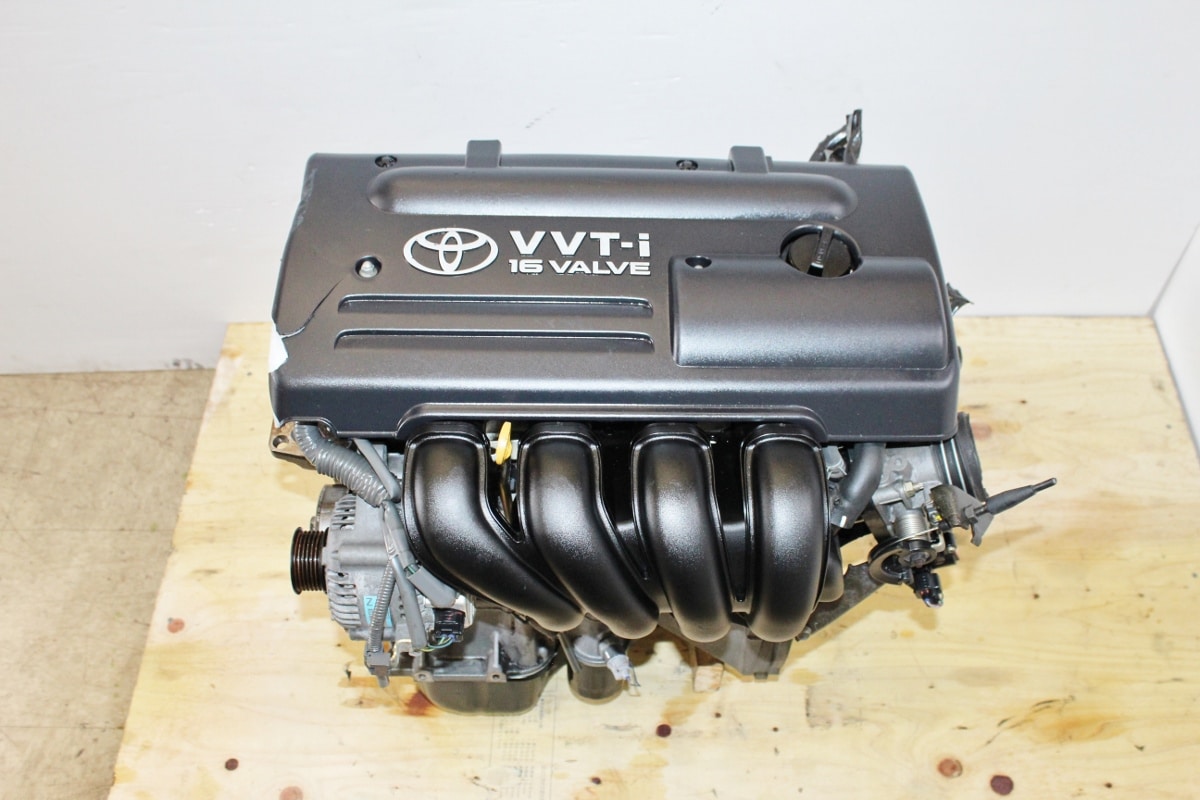
1ZZ-FE 1.8L Engine
🔍 FAQs about the 1ZZ-FE Engine
1. Is the 1ZZ-FE a good engine?
Yes, it’s considered a reliable and fuel-efficient engine if maintained properly. Post-2003 versions had improved piston rings to reduce oil burning issues.
2. How much horsepower does the 1ZZ-FE produce?
Between 120 hp and 140 hp, depending on the model and market.
3. Does the 1ZZ-FE have VVT-i?
Yes, most 1ZZ-FE engines came with Toyota’s VVT-i technology, improving fuel efficiency and performance.
4. What vehicles use the 1ZZ-FE engine?
Popular vehicles include the Toyota Corolla, Celica, MR2 Spyder, Pontiac Vibe, Chevrolet Prizm, and Toyota RAV4.
5. What is the lifespan of the 1ZZ-FE?
With proper maintenance, these engines can last 250,000 – 300,000 miles (400,000 – 480,000 km).
6. Does the 1ZZ-FE use a timing chain or belt?
It uses a timing chain, which generally lasts the lifetime of the engine.
7. What oil does the 1ZZ-FE take?
Toyota recommends 5W-30 synthetic or semi-synthetic oil.
8. Is the 1ZZ-FE good for tuning?
It’s not as performance-oriented as the 2ZZ-GE, but light modifications like intake, exhaust, and ECU tuning can provide gains. For serious performance, enthusiasts often swap to the 2ZZ-GE.